

This report is from this week’s CNBC’s UK Exchange newsletter with Ian King. Like what you see? You can subscribe here.
The dispatch
It has already been a gripping cricketing summer in England.
A fiercely fought series of five Test matches with India — global cricket’s financial powerhouse — came to an end earlier this week in what will likely go down as one of the greatest set of games ever played.
A quick aside. Cricket has many forms. The longest is known as Test Match and can last up to five days — and still potentially end in a draw. Then there is the One Day International. Each side gets to bowl up to 50 “overs,” with one over equaling six balls. Next, there’s Twenty 20 or T20, with each side getting 20 overs, or 120 balls.
And finally, there is The Hundred, the shortest of all, which is the brainchild of the sport’s governing body here, the England and Wales Cricket Board (or ECB — not to be confused with the other ECB).
The competition is now big business and, earlier this year, attracted record sums of investment — mainly from the United States and India — to professional cricket in this country. More on that in a moment.
The Hundred, which kicked off Tuesday and is played over five weeks during the English school summer holidays, was born in highly political circumstances.
It was conceived by the cricket board ostensibly to attract new, young fans baffled by longer forms of the game. In practice, however, it was also designed to take power away from the 18 counties that have traditionally been the bedrock of professional cricket in England and Wales.
The cricket board, before The Hundred, had no assets of its own to sell other than the TV rights — and accompanying commercial opportunities — to the England men’s and women’s international teams, and much of that income went back to the counties. It was concerned that, as franchise cricket took off in countries like India and Australia to the potential detriment of international cricket, the value of those TV rights could fall. Hence the creation of its own tournament.
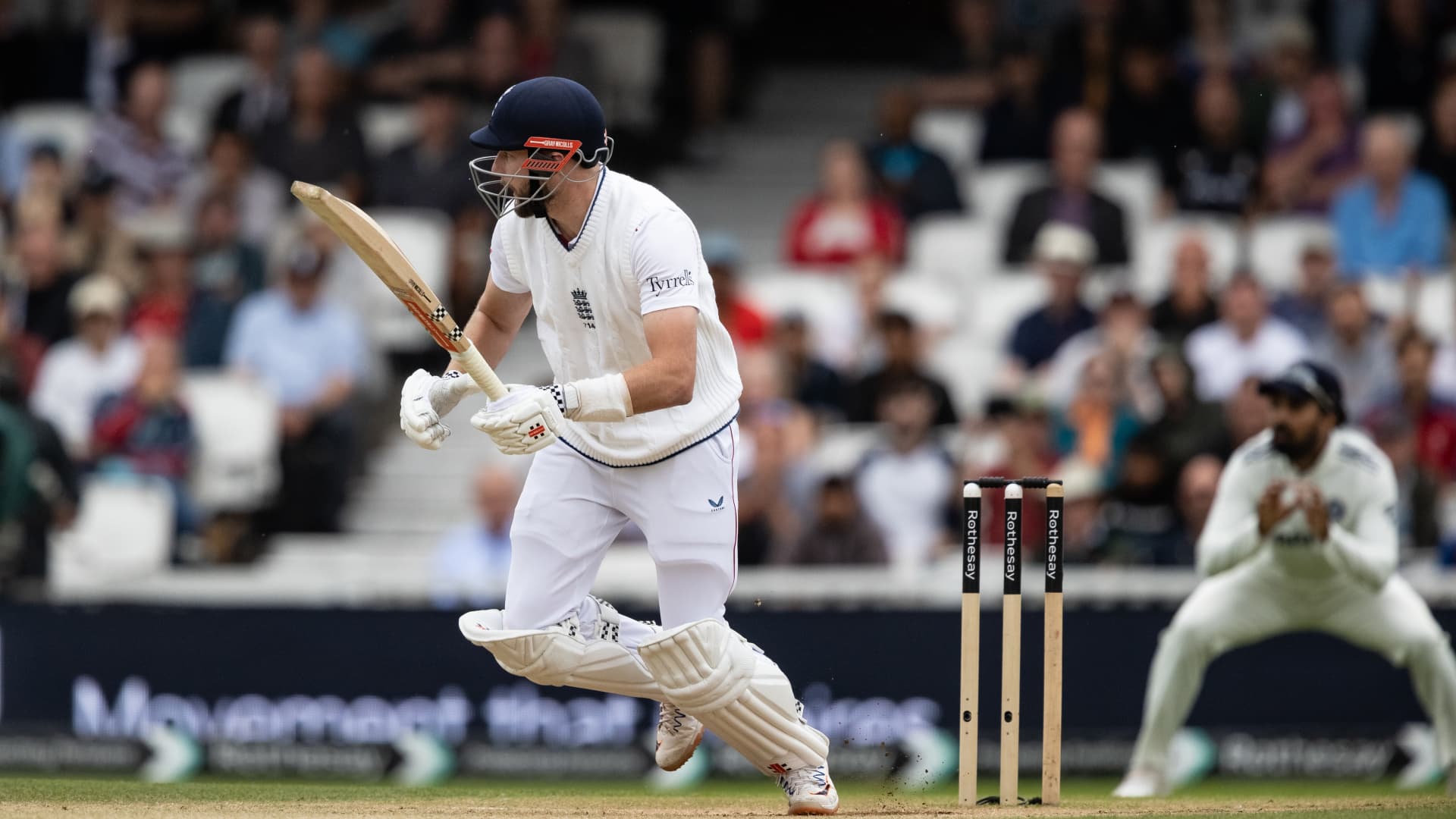
Gus Atkinson of England during Day Five of the Test Match between England and India at The Kia Oval on Aug. 4, 2025 in London, England.
Andy Kearns | Getty Images Sport | Getty Images
The Hundred’s county teams received a chunk of money to soothe any objections. Those concerns were well-grounded and, to an extent, have been borne out by events: the tournament, being played at the height of summer, has pushed traditional county fixtures to the margins of the season because many of the best county players — who are well-paid for doing so — compete in it.
This marginalization has hurt the County Championship, the sport’s most enduring competition, and domestic competitions, including the T20 Blast, the biggest money-spinner for English and Welsh counties over the last couple of decades.
The Hundred got off to a tricky start. The first draft for the competition was held in October 2019, months before Covid struck,…
Read More: England’s cricket power play: CNBC’s UK Exchange newsletter
