
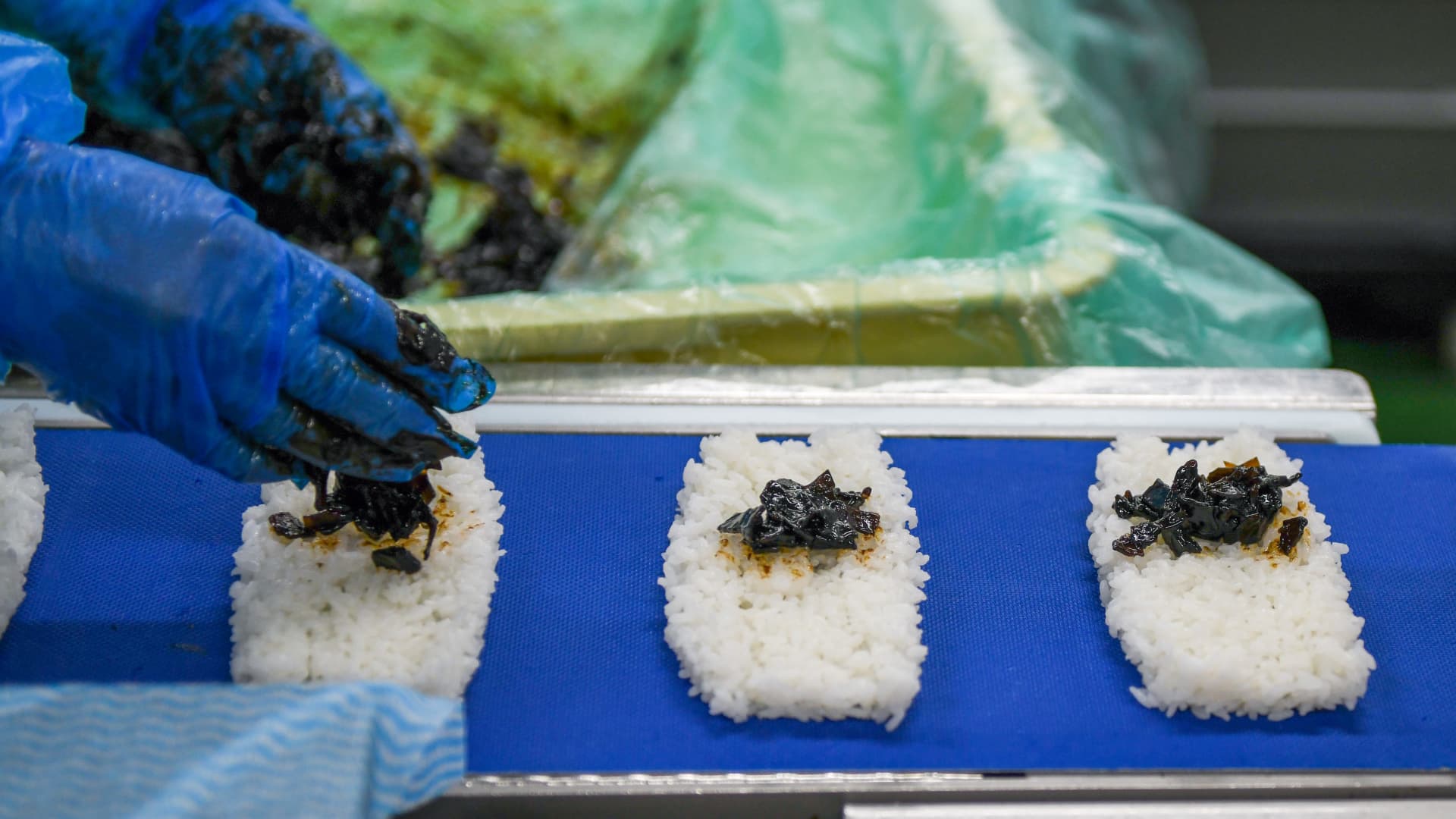

A worker puts konbu sea weed on rice on the riceball production line at the processing factory of Fuji Foods Co., in Funabashi, Chiba, Japan, on Friday, Jan. 26, 2024. Riceballs are one of the 7-Eleven Japan’s most important products, with more than 2 billion sold each year. Photographer: Noriko Hayashi/Bloomberg via Getty Images
Bloomberg | Bloomberg | Getty Images
After months of increasing rice prices, Japanese consumers may be finally getting some relief.
Data from Japan’s agriculture ministry revealed that the average price of a five-kg bag of rice had fallen to 3,920 yen ($27.03) for the week ending June 15, which marked the first time that rice had fallen below the 4,000-yen mark since the week that ended on March 2.
This was also the first time that rice prices came within the target set by Prime Minister Shigeru Ishiba.
In May, Ishiba promised to lower prices, reportedly saying he believed that “rice prices should be in the 3,000-yen range, since staying in the 4,000-yen range can’t be right.” Ishiba also reportedly told opposition lawmakers that he would take personal responsibility for the matter.
Rice has been a hot-button topic in Japan, with surging prices and shortages leading to empty shelves in supermarkets across the country.
Careless comments over rice had even cost a minister his job. Japan’s former farm minister Taku Eto stepped down in May, following public outrage over his comments on getting free rice from supporters.
The increase [in rice prices] was very drastic this year, maybe from March to April. So just a couple months ago, they have been increasing, every single day, maybe a couple hundred yen, every single day.
Rice prices in Japan rose sharply in the second half of 2024 — on the back of poor harvests in 2023 and an outsized demand from tourists — and accelerated further in the first half of this year.
Yoichi Ryu, a 26-year-old Tokyo resident, told CNBC on Friday that the spike in rice prices was stark.
He recounted that a five-kilo bag of ice cost about 1,800 yen to 2,000 yen two years ago, but prices have more than doubled to between 4,500 and 5,000 yen.
“The increase was very drastic this year, maybe from March to April. So just a couple months ago, they have been increasing every single day, maybe a couple hundred yen, every single day,” he added.
Government data revealed that rice prices had more than doubled in May, skyrocketing by 101.7% and marking the largest increase in over half a century.
Shortage easing, but unevenly
However, it seems that there is some light at the end of the tunnel for Japan’s rice shortage. Besides the release of government rice reserves, retailers have been offering rice imported from overseas, such as the U.S. and South Korea.
Supermarket Aeon started selling California-sourced rice on June 6, saying that the decision was made amid low domestic rice supplies in Japan.
In April, Japan imported rice from South Korea for the first time since 1999, Bloomberg said. South Korean food export…
Read More: Japan rice crisis shows signs of easing as prices stabilize and stocks
