
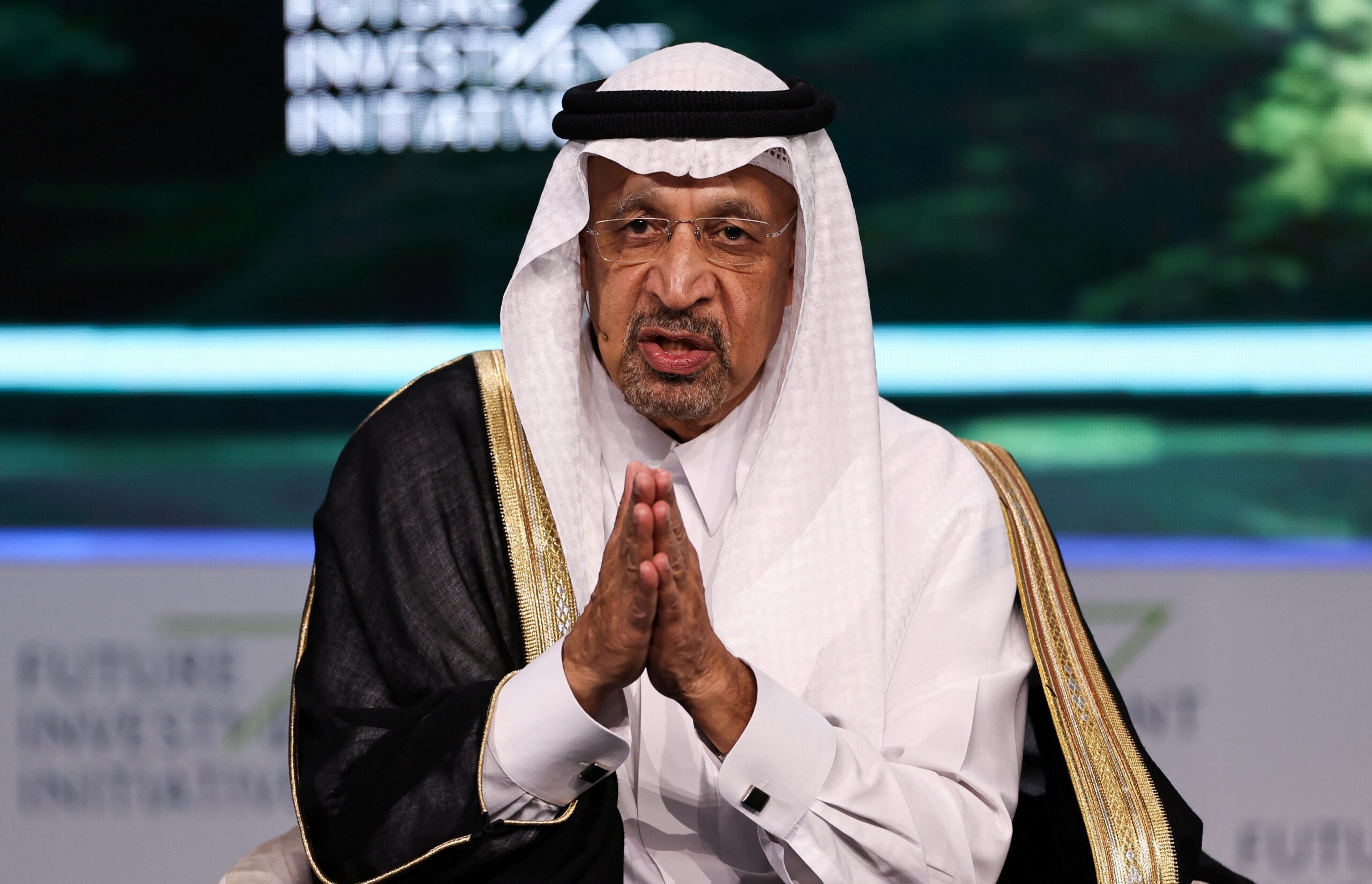


Reuters/Hamad I Mohammed
- Aim to be global finance centre
- Infrastructure not in place
- Sector fighting for investment
Saudi Arabia wants to emulate London or Hong Kong in the international money markets and become a global financial centre, Saudi investment minister Khalid Al-Falih said at a capital markets conference in Riyadh in February.
“We need to channel global capital,” he said. “We want to become a regional financial hub.”
But judging by the half-built nature of the King Abdullah Financial District (KAFD) in Riyadh, where the minister was speaking, the kingdom’s aspirations are ambitious to say the least.
KAFD is home to Tadawul Tower, itself host to the Saudi stock market, the largest in the Arab world by market capitalisation, at $2.9 trillion.
It is four times bigger than its closest rival, the Abu Dhabi Securities Exchange, and 12 times bigger than the Dubai Financial Market (DFM).
Yet the Saudi market remains exactly that, a primarily Saudi market, curtailing its ability to attract international finance.
Unlike the London Stock Exchange or even the DFM, international ownership of stock in the Saudi Exchange – or Tadawul – is limited, at just 13 percent. London by comparison is 65 percent. Even Dubai is 21 percent. Not a single international company lists on the Saudi exchange.
“Financial services is one of the top spots for investment priority,” says Dane Albertelli, a senior research analyst at Source Global Research, a market research company based in London.
“The Saudis want to be market leaders in everything. This [financial sector] is the one where it’s going to be a little bit trickier, because the infrastructure isn’t in place at the moment.”
This is reflected at KAFD, physically and otherwise.
Most of the buildings are new, completed only within the past four years. One third of its 1.6 sq km area is still a construction site.
On its wide, pedestrianised pathways between the skyscrapers, business people in suits or in the snow-white thobes typical of Gulf Arab males rub shoulders with dustier construction workers.
To compete in the Gulf and globally for international money, analysts and industry experts say that Riyadh must build the necessary infrastructure, physical and financial , to support an international market.
“You’re only going to get ahead if you build that eco-system,” said Constantin Cotzias, European director at Bloomberg LP, which sells terminals providing market data and analytics. “You’re going to need more accountants; you’re going to need more law firms.”
To be sure, global law firms are increasing their presence in the kingdom, a sector for which recruiters, too, are reporting an increase in hiring, as well as for…
Read More: Riyadh’s financial ambitions bump up against hard reality
