

In the on-again, off-again talk of tariffs on Canadian products being sold into the United States, Jérôme Pécresse has advice for his industry: “Be patient, be calm, be agile.”
Pécresse is chief executive of aluminum for Rio Tinto, which includes overseeing the company’s Canadian smelter operations.
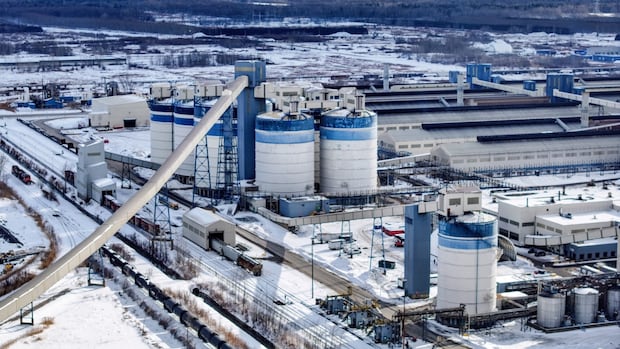
Though most of those are in Quebec, where Pécresse is based, this past week he paid a visit to Kitimat, on B.C.’s North Coast, where a Rio Tinto aluminum smelter employs roughly 1,100 people in the community of just over 8,000.
But, Pécresse said, no one in the community should be worried about losing their job.
While Canadian steel producers say they have already felt the impact of tariff threats with more pain to come, their aluminum-making counterparts remain relatively sanguine.
“Obviously it’s a concern,” Pécresse said, speaking to CBC Daybreak North host Carolina de Ryk, saying ultimately markets prefer stability. But he also pointed out that since every other aluminum-producing country that sells to the United States is getting hit by the same tariffs, Canada’s position remains strong.
“If everybody’s taxed the same, it’s probably something that’s not going to materially change our volumes… into the U.S. market.”
Daybreak North7:07Rio Tinto tariff situation
What could tariffs mean for Rio Tinto smelter workers in Kitimat?
Pécresse’s confidence is borne out in the numbers: Unlike steel, which has near-parity when it comes to Canada-U.S. trade, the United States’ dependence on Canada for aluminum is stark: the U.S. imports more than three times as much aluminum from Canada as it exports. According to World Bank data, the U.S. is the world’s largest aluminum importer, with the bulk coming from its northern neighbour.
And U.S.-based buyers know it: Jean Simard, CEO of the Aluminum Association of Canada, says most contracts between Canada and the United States have a clause built in agreeing that the American company purchasing Canadian aluminum will pay whatever tariffs are put in place.
In fact, when Trump imposed aluminum tariffs during his first term, Canadian companies saw their value spike, prompting one person in the industry to describe it as the president writing “a cheque for $600 million to Canadian aluminum producers,” as roughly half a billion in value flowed northward.
Further, the U.S. doesn’t have much in the way of options for domestic production: it’s estimated that just one Canadian smelter comes close to equalling the entire output of the U.S. industry.

While the province’s second largest industry has a built-in firewall against President Donald Trump’s tariffs on Canadian exports to the U.S., the complexity of the aluminum-related trade relationship between Quebec and the U.S. means…
Read More: Canada’s steel industry is bracing for tariff pain. Aluminum? Not so much
