

There’s been a lot of chatter about interprovincial trade barriers lately — namely, that Canada should remove them, with federal and provincial officials saying that opening up domestic trade could soften the impact of potential U.S. tariffs. But what are these barriers, and how do they impact our daily lives?
Just imagine that Canada’s 13 provinces and territories are each a small country, said Moshe Lander, an economics professor at Concordia University in Montreal.
“Each of which has its own government, its own ability to tax, its own spending decisions, its own regulations on road safety, health standards, educational qualifications — those types of things, if they differ between one province and another, is an interprovincial barrier.”
A 2019 IMF report showed that the country was leaving money on the table by keeping these barriers in place. In today’s dollars, removing them would pump $245 billion into the economy, report co-author Trevor Tombe recently said.
So what are some everyday interprovincial trade barriers that you may or may not notice in your everyday life? CBC News compiled a brief list — but there are thousands of them, and it’s unlikely they’d all be removed.
“Will we get rid of everything? Don’t be silly,” said former Alberta premier Rachel Notley told reporters on Friday.
Boozy barriers

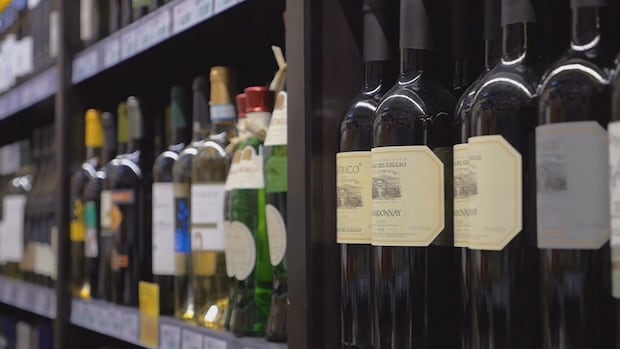
You’ve probably heard of this one: Most Canadian wineries, breweries and distilleries can’t sell or ship directly to consumers in other parts of the country. That’s why Ottawa beer makers can’t send brewskis across the river to Gatineau, Que., why you can’t buy Quebec-made whisky in Nova Scotia, and why — until recently — B.C. wineries couldn’t sell their vino directly to Albertans.
Most provinces have their own liquor retailers (like Ontario’s LCBO, Quebec’s SAQ and Nova Scotia’s NSLC) that have different rules related to selling, storing and labelling alcohol: “It’s easier to get a wine from Australia than it is to get a wine from B.C.,” said Lander.
Part of why these were established in the first place was so that smaller booze makers wouldn’t get squeezed out by competition from other provinces. That reasoning “has maybe outlived its usefulness,” said Lander.
While plenty of alcohol trade barriers remain, the provinces made a deal in 2018 to raise personal exemption limits on alcohol, letting individual Canadians carry six cases of beer, two cases of wine and six litres of spirits across borders.
A litany of language laws
There’s a whole list of general exceptions to the Canada Free Trade Agreement, which was signed in 2017 and governs free trade within Canada. Measures related to language are exempted, for example, unless they’re a “disguised restriction” on trade, according to the agreement.
Quebec’s language laws are one example of the resulting trade barriers —…
Read More: Booze, language laws and maple syrup? Here’s how interprovincial barriers
