

Your Mileage May Vary is an advice column offering you a new framework for thinking through your ethical dilemmas and philosophical questions. This unconventional column is based on value pluralism — the idea that each of us has multiple values that are equally valid but that often conflict with each other. Here is a Vox reader’s question, condensed and edited for clarity.
My parents and siblings are all highly religious, living in a Southern state. My wife and I have both moved away as well as left our religion, so obviously that has led to some changes in values. Nowhere has that been more obvious in this recent election cycle than with abortion.
Nearly all my relatives chose to vote for Trump this election, and limiting access to abortion is one of the major reasons why. For my wife and I, it’s mind-boggling how they can be fully aware of how many women are being harmed and even killed by these new restrictions and just brush it off by saying, “Well, I do think there should be SOME exceptions,” and then vote for people who do NOT think that, without any tension whatsoever. It almost feels like the only way they could be persuaded to care was if somebody close to them was the victim of one of these laws.
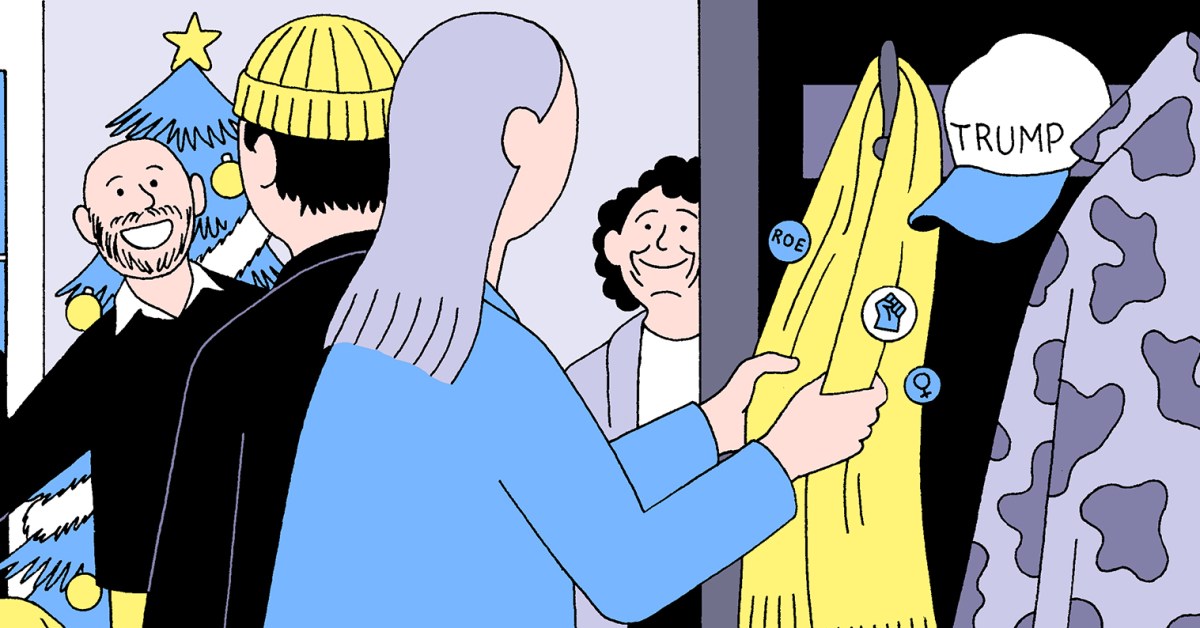
We’ll be home to see them around Christmastime, and we are still struggling with navigating the dynamic. How do we interact like everything is fine with them while knowing that their values are so diametrically opposed to ours? That they are completely fine with dramatically increasing human suffering to check a religious box? I do love my family, and they’ve never taken their beliefs out on us in the “You’re going to hell!” kind of way, but I still have trouble wrestling with this and trying to act like we can just gather up ethical issues in a box called “politics” and never talk about it. Any advice?
Right now, your family members are not morally legible to you. What I mean is that you’re having trouble understanding how they could possibly vote the way they did. It’s “mind-boggling,” as you put it. But I want to suggest that it’s mind-boggling in part because you’re making two core assumptions.
The first assumption is that “their values are so diametrically opposed to ours.” The second is that “they are completely fine with dramatically increasing human suffering.” These assumptions are sticking you with a dilemma: You don’t know how to talk to your relatives about their choice to vote for Trump — but it also feels wrong to just hold your tongue.
Have a question you want me to answer in the next Your Mileage May Vary column?
So consider this: Just as your tongue has taste buds, your mind has moral taste buds. That’s according to social psychologist Jonathan Haidt, who co-developed moral foundations theory. His research suggests that people in different political camps prioritize different moral values. Liberals are those whose “moral taste buds” make them especially sensitive to the…
Read More: How do I deal with my Trump-voting family at Christmas?
