
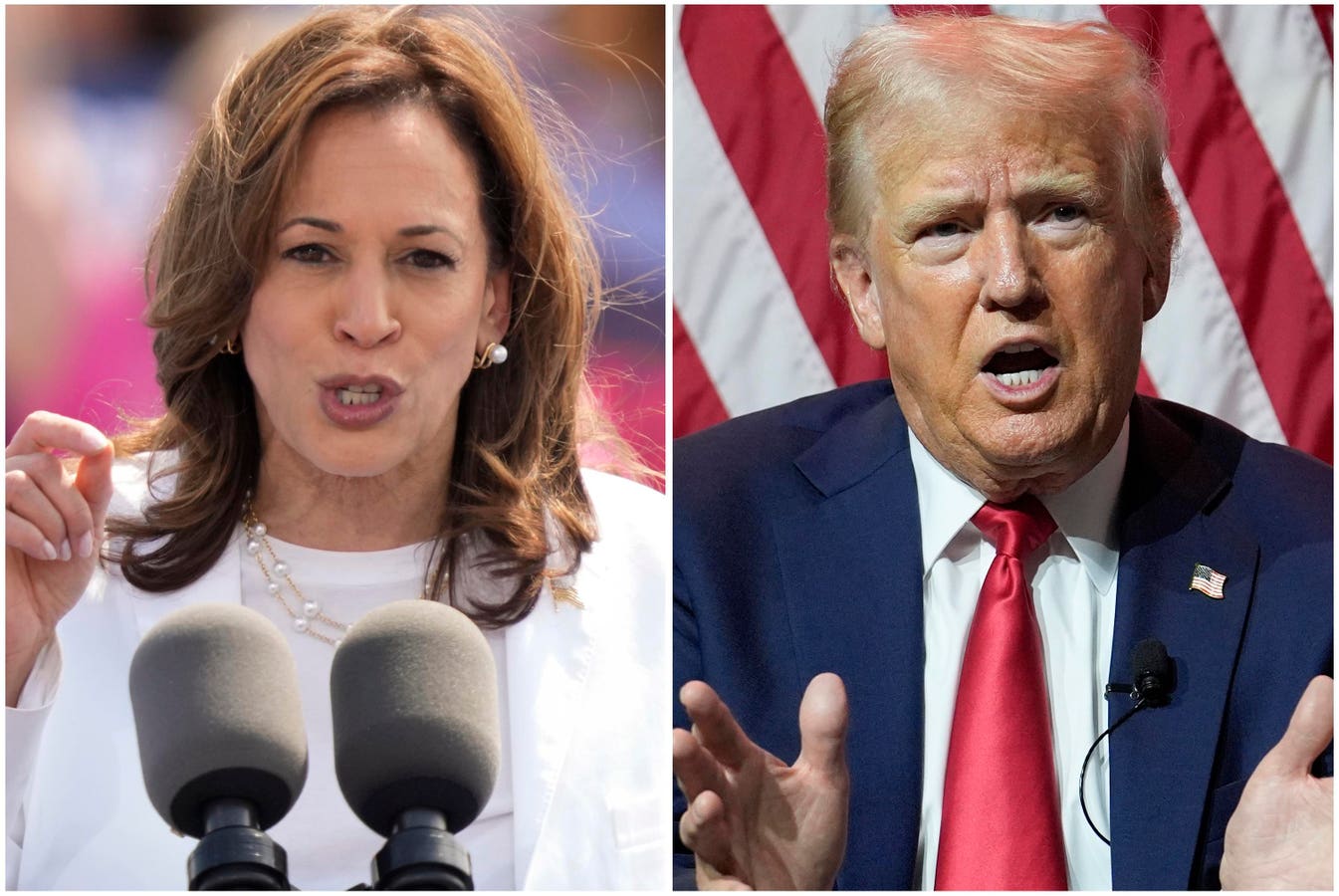

The results of the presidential and congressional elections will have far-reaching effects on the fintech industry.
Associated Press
The intersection of financial services and technology, otherwise known as fintech, has increasingly come under federal scrutiny, especially to the extent new firms have attempted to offer traditional banking services without having a banking license. To better understand the impact of today’s presidential and congressional elections on the fintech industry, Forbes spoke with several policy experts and executives. They identified three major areas that could see changes: the Consumer Financial Protection Bureau (CFPB), the partnerships fintechs have with banks to offer banking services and the CFPB’s new 1033 rule that governs consumers’ control over their banking data.
Nearly everyone we spoke with said the most visible changes will be in the CFPB, a federal agency created by the 2010 Dodd–Frank Wall Street Reform and Consumer Protection Act. The CFPB aims to “protect consumers from unfair, deceptive, or abusive practices and take action against companies that break the law.” Over the past four years, the agency has been more active than it was under President Trump, a dynamic that’s apparent in the number of public remarks the CFPB has made, the information requests it has sent to companies and the fines it has levied, says Katherine Flocken, a principal at Washington, D.C., regulatory advisory firm FS Vector. In 2023, the CFPB ordered $3.1 billion in fines and refunds for consumer relief, the largest sum it had ordered since 2015.
If Kamala Harris wins the election and Democrats retain some control of Congress, a similar level of CFPB enforcement and oversight activity could continue as it has under President Biden, Flocken believes. If Donald Trump wins and Republicans take control of Congress, that activity will slow. “[The CFPB] definitely would be less robust under a Republican administration and certainly with a Republican-controlled Congress,” Flocken says.
Jackie Reses, the cofounder and CEO of Lead Bank, a Kansas City bank that partners with fintechs to offer banking services, agrees there will be major changes to the CFPB if Trump is elected. She thinks some CFPB rules could potentially be rolled back, such as one the CFPB passed earlier this year that aims to reduce the late fees consumers pay for credit card payments from $32 to $8 on average.
“If there’s a sweep either way–if we have Harris-blue or Trump-red–that’s huge,” Flocken adds, referring to scenarios where Harris wins and Democrats take both the House and Senate or where Trump wins and Republicans take full control of Congress. “There will be much faster, much more aggressive changes on either side.”
Michele Alt, a cofounder and partner at advisory firm Klaros and a former lawyer at the Office of the Comptroller of the Currency, is more skeptical that we’ll see big changes for the fintech industry. She…
Read More: 3 Ways The Election Could Impact Fintech
