

Close Menu
  • Home
  • Markets
    • Earnings
  • Banks
    • Crypto
    • Investing
  • Business
    • Retail
  • industry
    • Finance
    • Energy
    • Real Estate
  • Politics
Facebook X (Twitter) Instagram
Facebook LinkedIn
Financial Market News
Subscribe Now
  • Home
  • Markets
    • Earnings
  • Banks
    • Crypto
    • Investing
  • Business
    • Retail
  • industry
    • Finance
    • Energy
    • Real Estate
  • Politics
Financial Market News
You are at:Home»Retail»Why U.S. auto factories are so unproductive

Retail

Why U.S. auto factories are so unproductive

September 30, 20242 Mins Read
Share Facebook Twitter Pinterest LinkedIn Tumblr Email
Share
Facebook Twitter LinkedIn Pinterest Email
OLOGI Ad 2


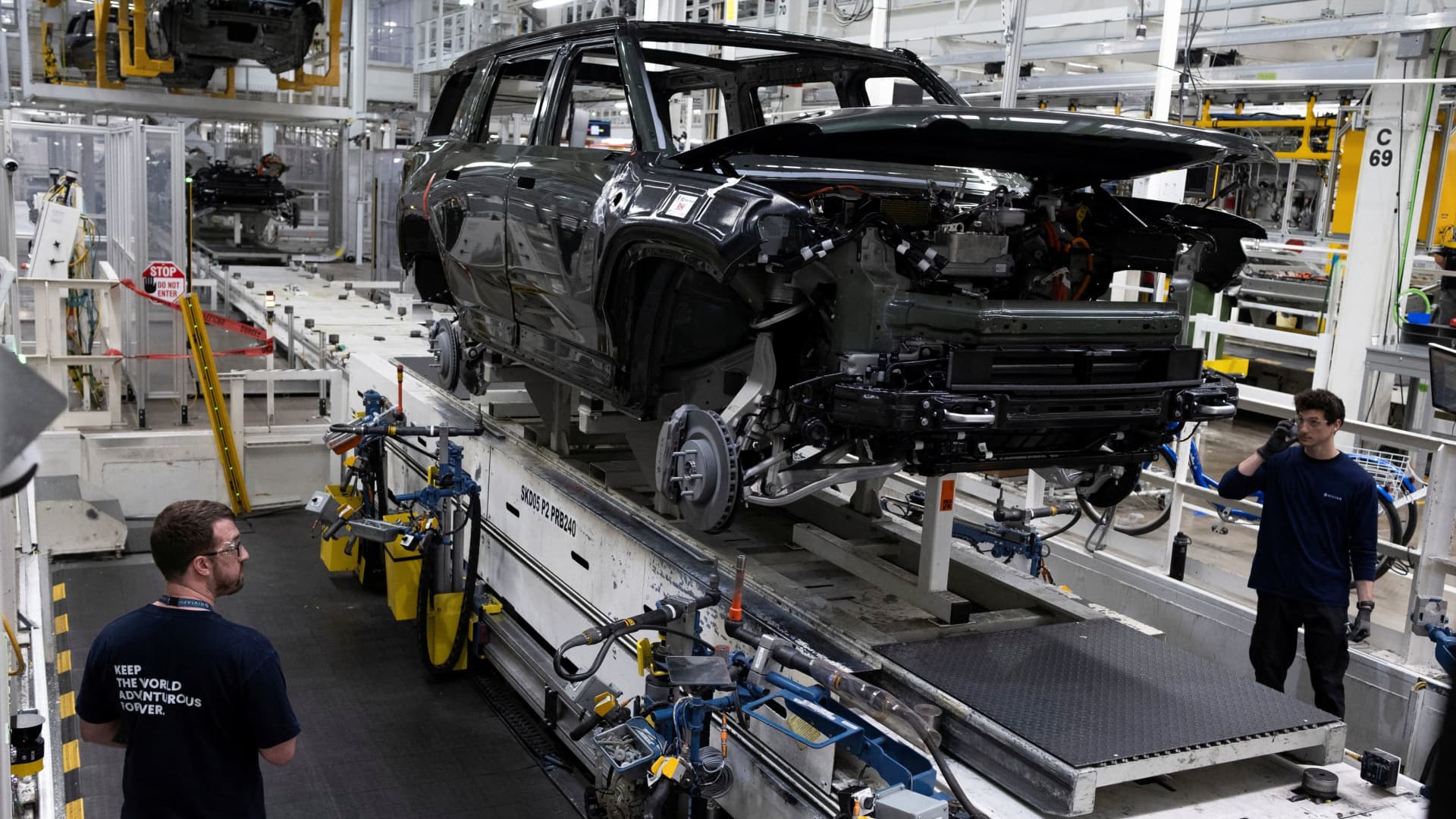
Automotive factories throughout the United States and around the world are not producing nearly as many cars as they need to in order to be profitable. A mixture of factors are driving down productivity, but two stand out.

First, new car demand simply hasn’t snapped back to pre-pandemic levels. A record 17.5 million cars sold in the U.S. in 2016, according to forecasting firm GlobalData. That trickled down to about 17 million by 2019. But in the pandemic, the number plummeted to a 2022 low of 13.8 million. Those sales have only partially recovered — and are expected to be just shy of 16 million units in 2024.

High prices are keeping customers away or sending them to used markets, said GlobalData’s Global Vice President of Automotive Research Jeff Schuster.

“That cost pressure isn’t necessarily going to fully go away, which is why we don’t believe demand is going to get back to where it was,” he said.

The second factor is the transition to electric vehicles.

“The market of electric vehicles was supposed to bloom in the 2020s, and it just hasn’t occurred to that level yet,” said Sam Fiorani, vice president of global vehicle forecasting at AutoForecast Solutions. “We have all these plants that are ready to build 200,000 or 300,000 electric vehicles and nobody to buy them. So we’re waiting for the market to show up.”

Automakers face a puzzle they have never encountered before — designing vehicles, supply chains and factories to accommodate multiple powertrains.

For more than a century, nearly all cars ran on gasoline. Automakers were hoping for a clean jump to a world where all cars ran on batteries. But the transition to electrification has been a lot messier than expected.

“I’ve been at this for over 35 years,” said Michael Robinet, executive director, automotive consulting, at S&P Global Mobility. “I can never remember a period like this — with so many possibilities up in the air that could really change the trajectory of the industry.”

Watch the video to learn more.


Read More: Why U.S. auto factories are so unproductive

TGC Banner 1
Auto Autos Breaking News: Business business news Environment factories neutral Retail industry unproductive Video First
Share. Facebook Twitter Pinterest LinkedIn Tumblr Email
Previous ArticleCarnival Q3 earnings, market trends: Asking for a Trend
Next Article Newly ID’d opt-ins will add $30 million to NAR settlement fund

Related Posts

Epstein victims get $72.5M from Bank of America settlement

March 29, 2026

Pricy airfare, airport chaos test travelers

March 29, 2026

Pokemon card values rise amid Logan Paul Pikachu auction

March 29, 2026

How the big oil and gas CEOs think the Iran war supply disruption will play

March 28, 2026
Add A Comment
Leave A Reply Cancel Reply

Energy News

BOI’s N825m clean energy financing boosts Nigerian industries – EnviroNews

How the big oil and gas CEOs think the Iran war supply disruption will play

What the Energy Industry Is (and Isn’t) Saying About the War in Iran

Trump says Iran let 10 oil ships through Strait of Hormuz as ‘present’

Banks News

Bank of 2030: The Future of Investment Banking | Deloitte

No one is 100% happy with the stablecoin yield agreement: State of Crypto

Oppenheimer Lowers U.S. Bancorp Price Target to $71

CLARITY Act Nears Finish Line, but Industry Support Remains Key, Says Tim

Real Estate News

Giants chairman Greg Johnson Q&A Part 1: Tony Vitello hire, payroll, real

Another Dallas real estate fiasco

Distressed Asset Auctions Reveal Shifting Patterns Across Commercial Real

The Condo Market Is Showing Signs of Recovery. What Potential Buyers Should

© 2026 finmar.news

Type above and press Enter to search. Press Esc to cancel.