
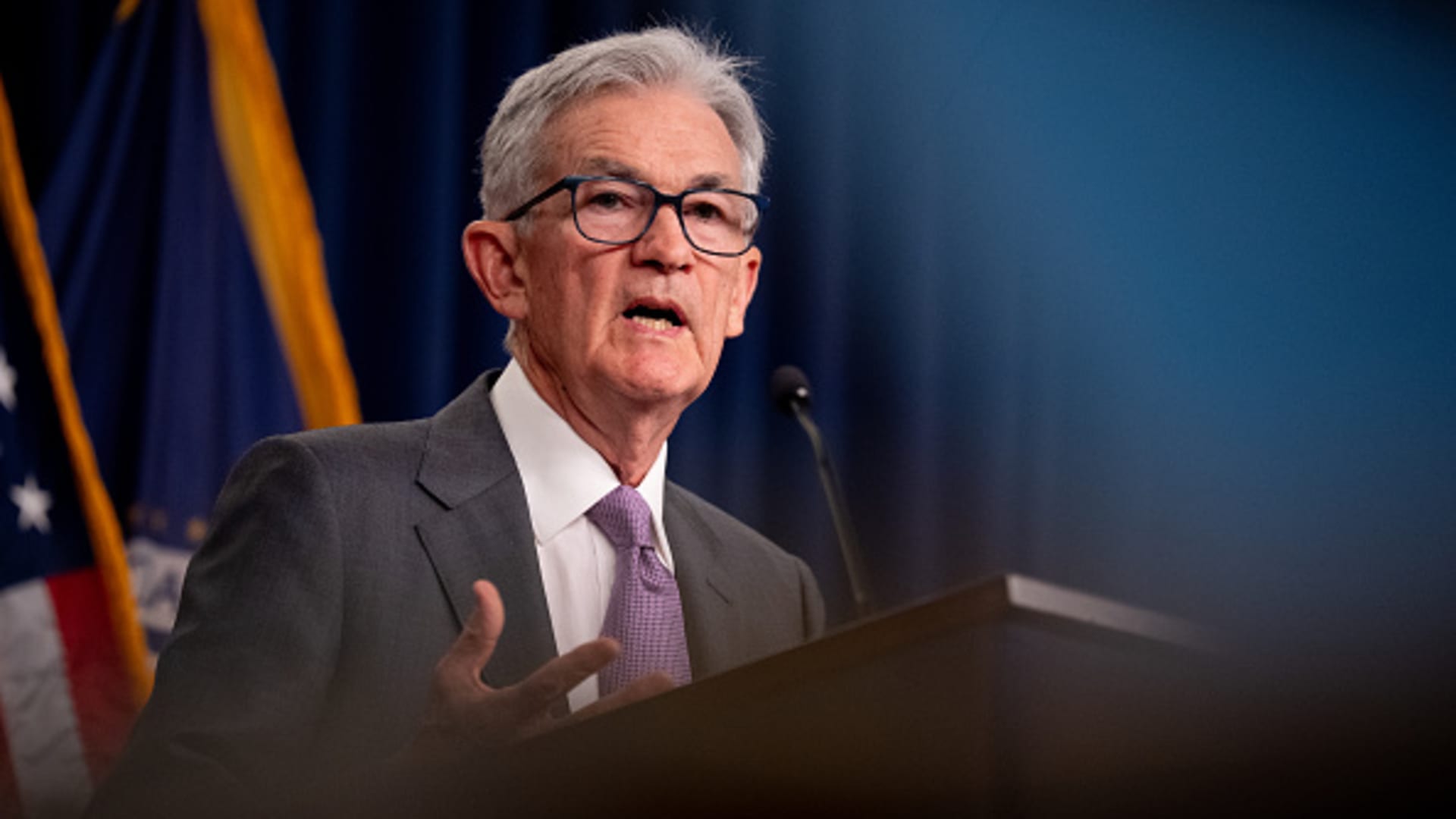

Federal Reserve Chairman Jerome Powell.
Andrew Harnik | Getty Images
Federal Reserve chair Jerome Powell on Friday gave the clearest indication yet that the central bank is likely to start cutting interest rates, which are currently at their highest level in two decades.
If a rate cut comes in September, as experts expect, it would be the first time officials have trimmed rates in over four years, when they slashed them to near zero at the beginning of the Covid-19 pandemic.
Investors may be wondering what to do at the precipice of this policy shift.
Those who are already well diversified likely don’t need to do much right now, according to financial advisors on CNBC’s Advisor Council.
“For most people, this is welcome news, but it doesn’t mean we make big changes,” said Winnie Sun, co-founder and managing director of Sun Group Wealth Partners, based in Irvine, California.
“It’s kind of like getting a haircut: We’re doing small trims here and there,” she said.

Many long-term investors may not need to do anything at all — like those holding most or all of their assets in a target-date fund via their 401(k) plan, for example, advisors said.
Such funds are overseen by professional asset managers equipped to make the necessary tweaks for you.
“They’re doing it behind the scenes on your behalf,” said Lee Baker, a certified financial planner and founder of Claris Financial Advisors, based in Atlanta.
More from Personal Finance:
Why remote work has staying power
This RMD strategy can help avoid IRS penalties
Some colleges is now cost nearly $100,000 a year
That said, there are some adjustments that more-hands-on investors can consider.
Largely, those tweaks would apply to cash and fixed income holdings, and perhaps to the types of stocks in one’s portfolio, advisors said.
Lower rates are ‘positive’ for stocks
In his keynote address on Friday at the Fed’s annual retreat in Jackson Hole, Wyoming, Powell said that “the time has come” for interest-rate policy to adjust.
That proclamation comes as inflation has fallen significantly from its pandemic-era peak in mid-2022. And the labor market, though still relatively healthy, has hinted at signs of weakness. Lowering rates would take some pressure off the U.S. economy.
The Fed will likely be choosing between a 0.25 and 0.50 percentage-point cut at its next policy meeting in September, Stephen Brown, deputy chief North America economist at Capital Economics wrote in a note Friday.
Lower interest rates are “generally positive for stocks,” said Marguerita Cheng, a CFP and chief executive of Blue Ocean Global Wealth, based in Gaithersburg, Maryland. Businesses may feel more comfortable expanding if borrowing costs are lower, for example, she said.
But uncertainty around the number of future rate cuts, as well as their size and pace, mean investors shouldn’t make wholesale changes to their portfolios as a knee-jerk reaction to Powell’s proclamation, advisors said.
“Things can change,” Sun said.
Importantly, Powell didn’t commit…
Read More: How investors can prepare for lower interest rates
