



Key points:
-
Home ownership affordability in U.S. fell 2.6 percent in past
year - Home prices have reached record levels
-
Bridgeport, Connecticut, among cities with largest declines in
affordability
A key measure of housing affordability from the Federal Reserve Bank of
Atlanta suggests the dream of home ownership is becoming less realistic for
U.S. median-income households as both new and existing house prices have risen
sharply.
National affordability
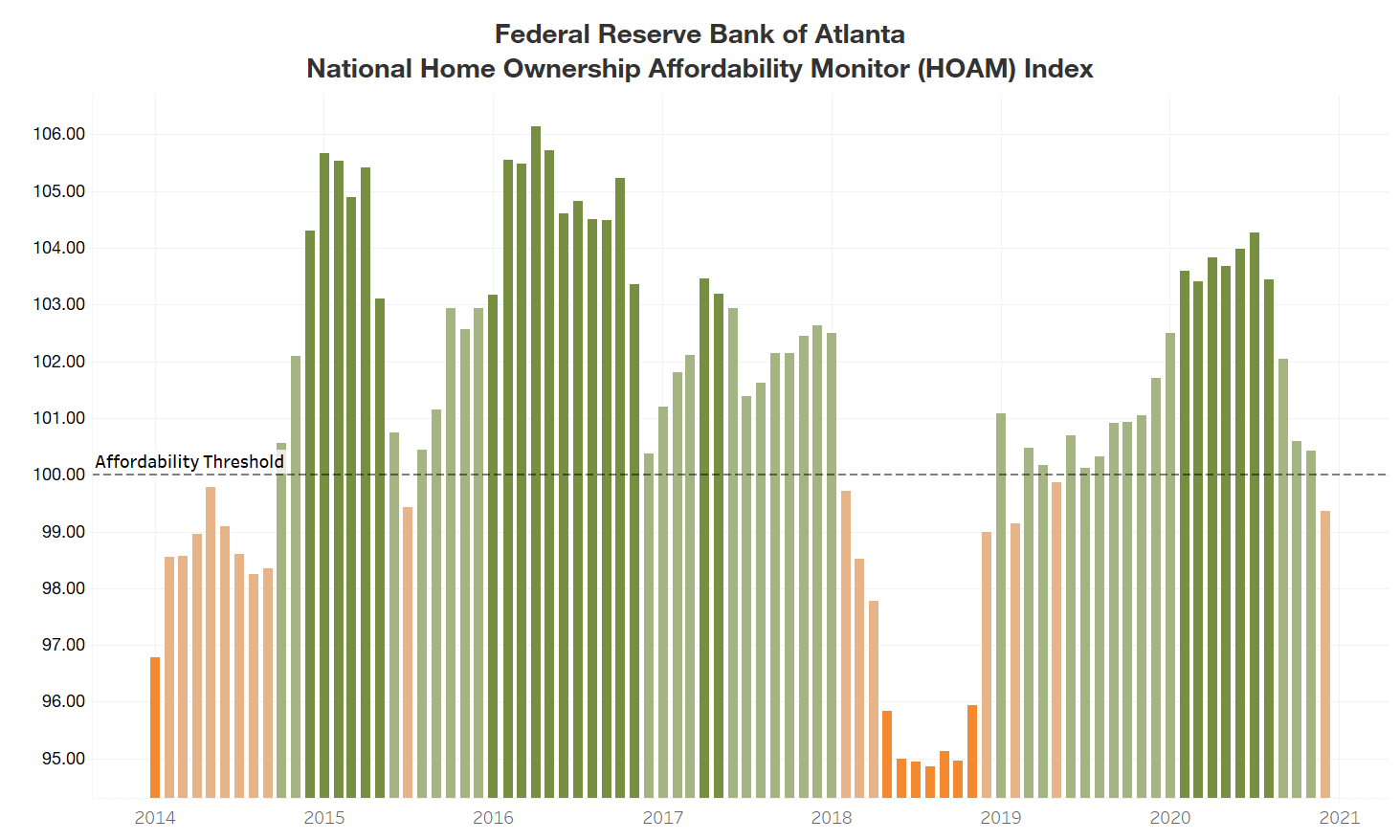
The Atlanta Fed’s
Home Ownership Affordability Monitor
(HOAM) index shows that homes continue to become less affordable. Supplies of
existing and new homes have failed to keep pace with demand driven by
historically low interest rates. Consequently, home prices have climbed
sharply, greatly affecting what the average household can buy in today’s
market.
A HOAM index below 100 indicates that the median-priced home is unaffordable
to the median-income household given the current interest rate. In December,
the HOAM index fell below 100, indicating that the median-income household
cannot afford the median-priced home. At 99.36, the December HOAM index was
below its 101.71 reading a year earlier. Home ownership costs in December as
measured by principal and interest, taxes, and insurance accounted for 30.1
percent of the annual median income of the average U.S. household, slightly
above the 30 percent affordability threshold set by the U.S. Department of
Housing and Urban Development.
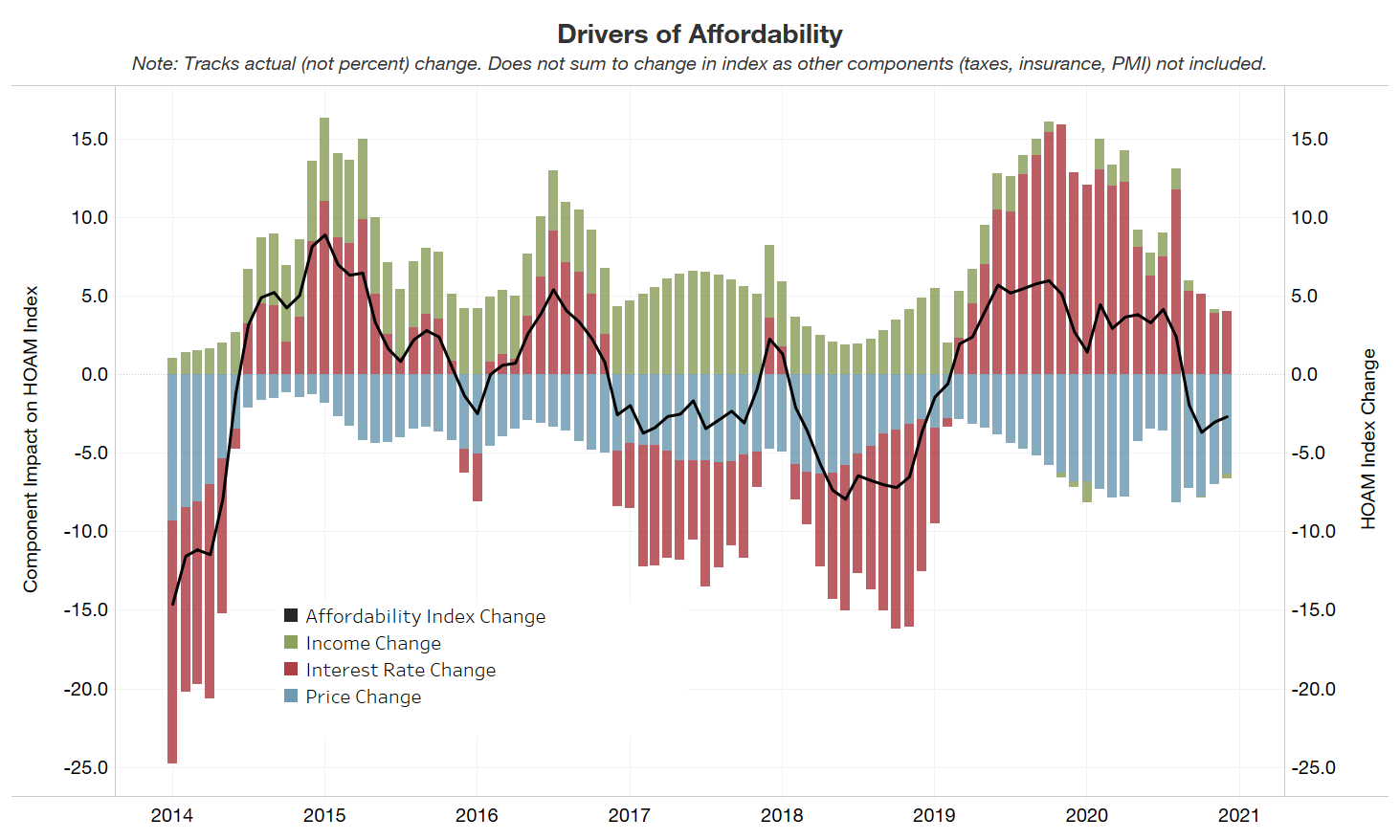
Relatively low interest rates have had a positive impact on affordability. In
December, the 30-year fixed mortgage interest rate dropped to 2.68 percent, 9
basis points lower than November and a decline of about 104 basis points from
December 2019. Meanwhile, throughout the pandemic, the projected national
median household income remained stable, increasing by only 0.6 percent to end
the year at $63,726. Still, any benefits from low interest rates and stable
household incomes continue to be offset by rapidly rising home prices. The
national median existing home price (three-month moving average) peaked at
$307,552 in December, up 2.07 percent from a revised $301,297 for November.
However, compared with a year ago, home prices rose 16 percent in December.
Regional affordability
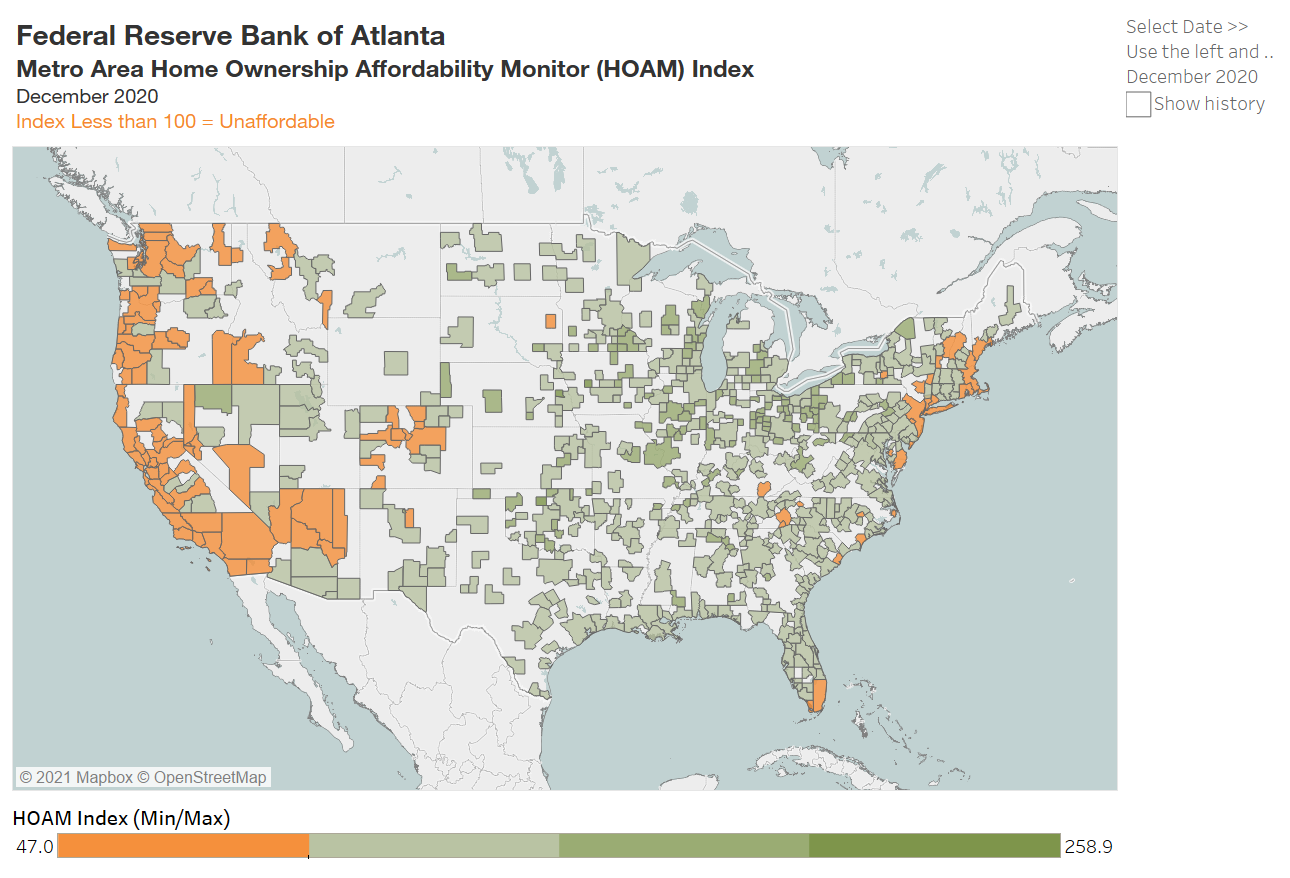
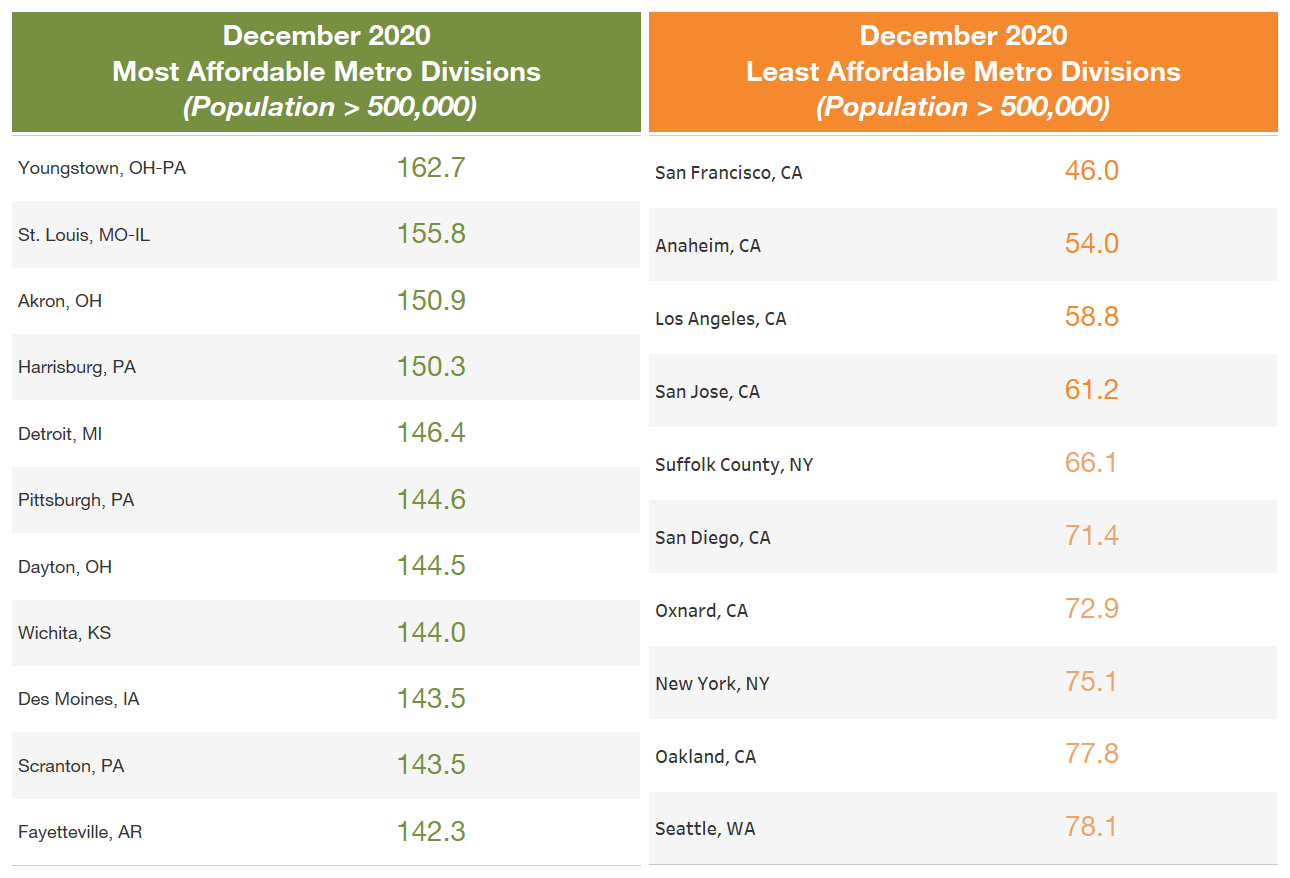
In most regions, lower interest rates have helped keep housing affordable.
Only about 17 percent of metro areas in the United States had a HOAM index
below 100 in December. For the most part, high-cost metro areas on the West
Coast as well as in the Northeast and south Florida were among the least
affordable, while metros in the middle of the country, particularly in the
Midwest, tended to be the most affordable. Even so, the affordability trend in
many regions is eroding. In December, 33 percent of metro areas saw a decline
in affordability from the year…
Read More: Low Interest Rates, Inventories Affect Housing Affordability
