
The U.S. oil industry has a double-edged problem: It’s running out of fresh water in one of the most productive U.S. regions while being overwhelmed by chemical-laced liquids.
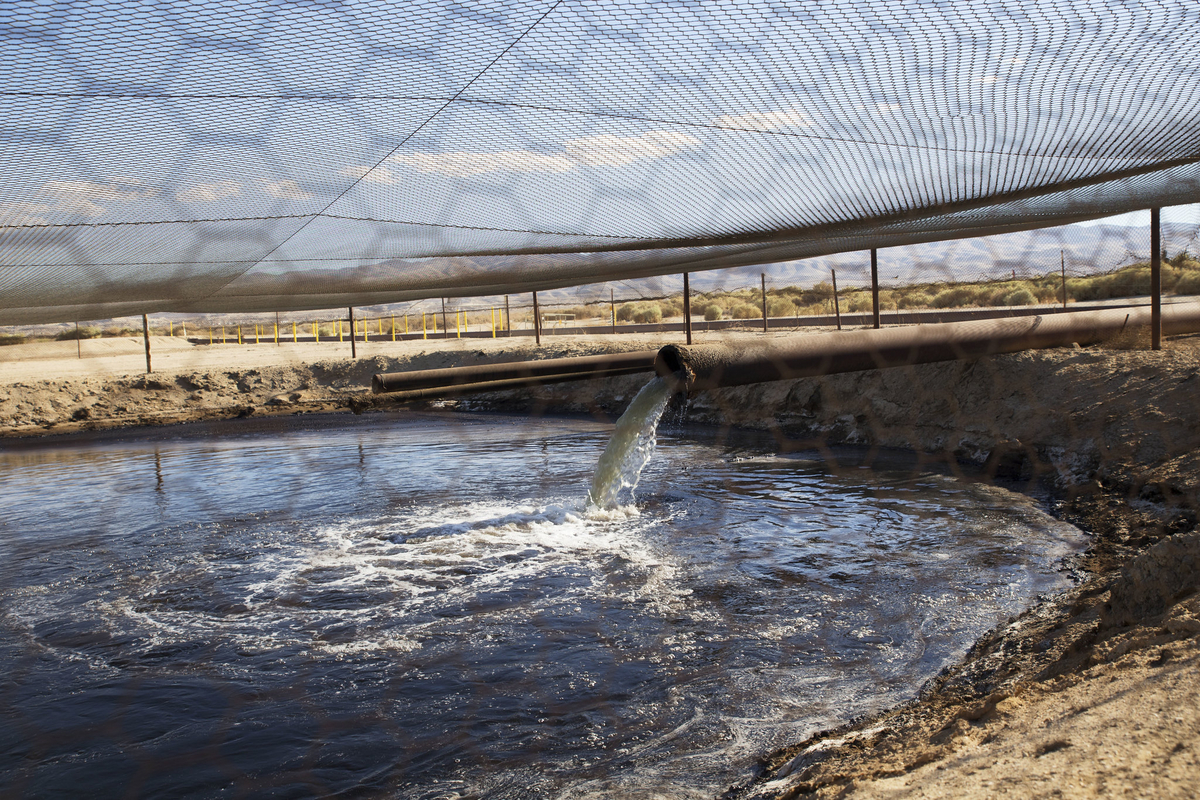
In some areas of the Permian Basin, nearly five barrels of briny water comes out of the ground for every one barrel of crude. Until recently, operators in the prolific region in Texas and New Mexico relied almost exclusively on reinjecting that liquid back into the ground or pumping it into open air waste pits.
But after earthquakes were linked to reinjenctions — and water officials warned of dwindling freshwater and groundwater supplies in drought-stricken areas — states, oil companies and critics have been looking at ways to reuse this so-called produced water. That is raising concerns, however, of the long-term impacts of reusing produced water and its potential impact on groundwater.
“You have to know with certainty what the [contaminants] are in the produced water and know with certainty that you can treat those out to a level of safety for both aquatic life and drinking water purposes,” said Tannis Fox, a senior attorney with the Western Environmental Law Center. “We’re a long way off from there.”
Colorado legislators ordered the creation of a state research committee to study the issue and potential uses for produced water. New Mexico in May unveiled draft rules that prohibit discharging that liquid into waterways or using it for agriculture, but they pave the way for pilot projects that could see the water be reused for industrial purposes. Texas’ oil and gas agency is in the process of rewriting rules for how produced water can be used, which could include agriculture and even discharging it into dry riverbeds.
To Rusty Smith, director of the Texas Produced Water Research Consortium, the situation presents an “opportunity to kill two birds with one stone.”
“The state of Texas, who has a massive looming water shortage on our horizon, is trying to find all the potential solutions to this water problem that they have,” Smith said.
As much as 14 million barrels of wastewater are churned out of the Permian Basin every day — enough water to fill more than 54 Olympic swimming pools. The Permian accounts for nearly 50 percent of all U.S. oil production and has become ground zero for produced water as Texas works to lessen the number of earthquakes caused by reinjecting the water deep into the earth.
It’s mostly up to states themselves to govern how produced water is handled, and whether it can be recycled and reused. But EPA created the national Water Reuse Action Plan several years ago, which includes federal studies of recycling produced water and partnerships with oil- and gas-producing states looking at the potential.
And produced water is already being used and discharged.
EPA granted permits that allowed produced water to be discharged into the Susquehanna River in Pennsylvania as it meets “40 different…
Read More: Oil industry tries to escape water crunch