
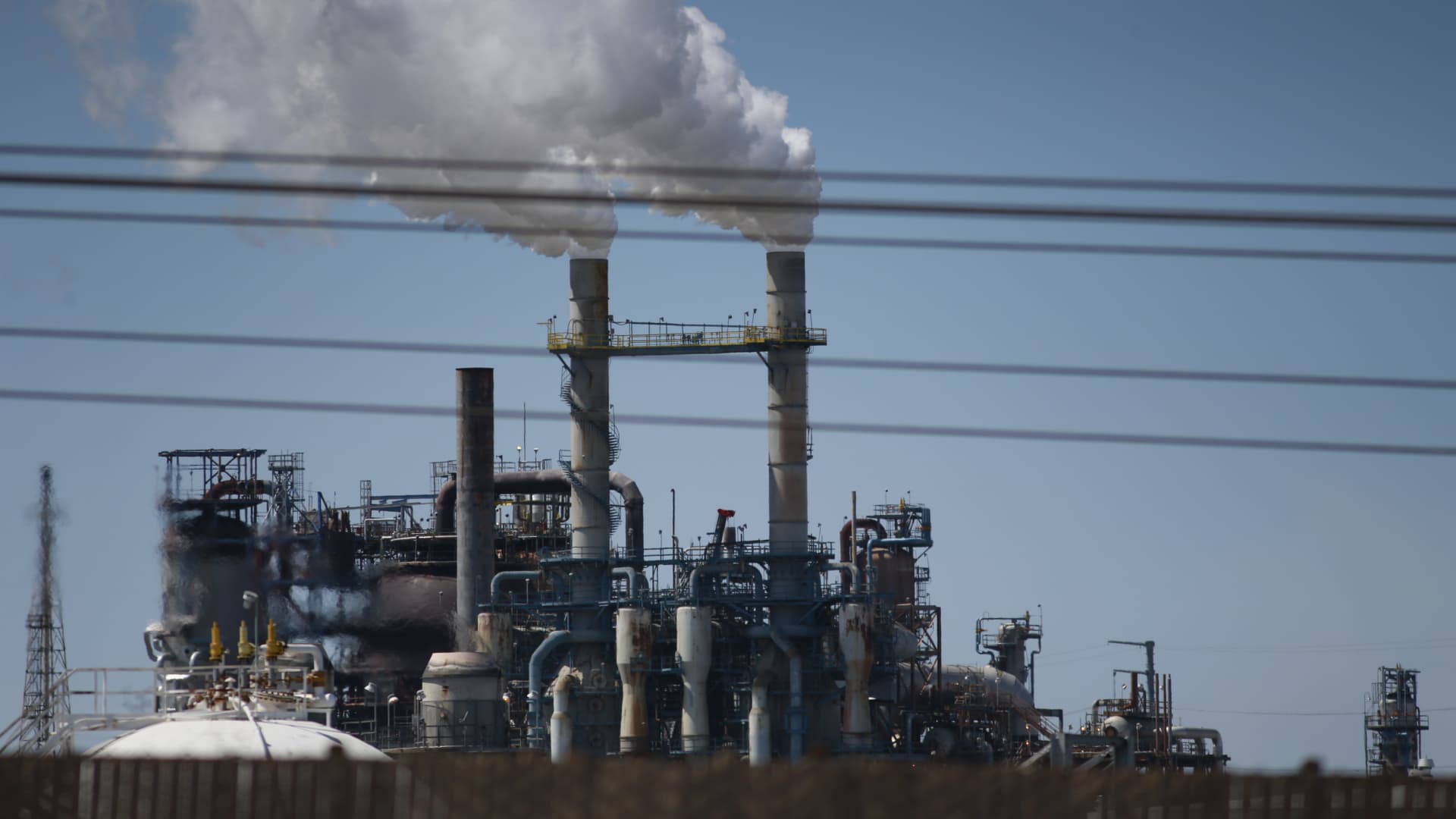

A chimney from the Linden Cogeneration Plant is seen in Linden New Jersey April 22, 2022.
Kena Betancur | View Press | Corbis News | Getty Images
Natural gas producers are planning for a significant spike in demand over the next decade, as artificial intelligence drives a surge in electricity consumption that renewables may struggle to meet alone.
After a decade of flat power growth in the U.S., electricity demand is forecast to grow as much as 20% by 2030, according to a Wells Fargo analysis published in April. Power companies are moving to quickly secure energy as the rise of AI coincides with the expansion of domestic semiconductor and battery manufacturing as well as the electrification of the nation’s vehicle fleet.
AI data centers alone are expected to add about 323 terawatt hours of electricity demand in the U.S. by 2030, according to Wells Fargo. The forecast power demand from AI alone is seven times greater than New York City’s current annual electricity consumption of 48 terawatt hours. Goldman Sachs projects that data centers will represent 8% of total U.S. electricity consumption by the end of the decade.
The surge in power demand poses a challenge for Amazon, Google, Microsoft and Meta. The tech companies have committed to powering their data centers with renewables to slash carbon emissions. But solar and wind alone may be inadequate to meet the electricity load because they are dependent on variable weather, according to an April note from consulting firm Rystad Energy.
“Economic growth, electrification, accelerating data center expansion are driving the most significant demand growth in our company’s history and they show no signs of abating,”
Robert Blue
Dominion Energy, Chief Executive Officer
Surging electricity loads will require an energy source that can jump into the breach and meet spiking demand during conditions when renewables are not generating enough power, according to Rystad. The natural gas industry is betting gas will serve as the preferred choice.

Natural gas prices year to date
“This type of need demonstrates that the emphasis on renewables as the only source of power is fatally flawed in terms of meeting the real demands of the market,” Richard Kinder, executive chairman of pipeline operator Kinder Morgan, told analysts during the company’s first-quarter earnings in April.
“The primary use of these data centers is big tech and I believe they’re beginning to recognize the role that natural gas and nuclear must play,” Kinder said during the call. Kinder Morgan is the largest natural gas pipeline operator in the U.S. with 40% market share.
Natural gas is expected to supply 60% of the power demand growth from AI and data centers, while renewables will provide the remaining 40%, according to Goldman Sachs’ report published in April.
Gas demand could increase by 10 billion cubic feet per day by 2030, according to Wells Fargo. This would represent a 28% increase over the 35 bcf/d that is…
Read More: AI to drive natural gas boom as utilities face surging data center demand
