
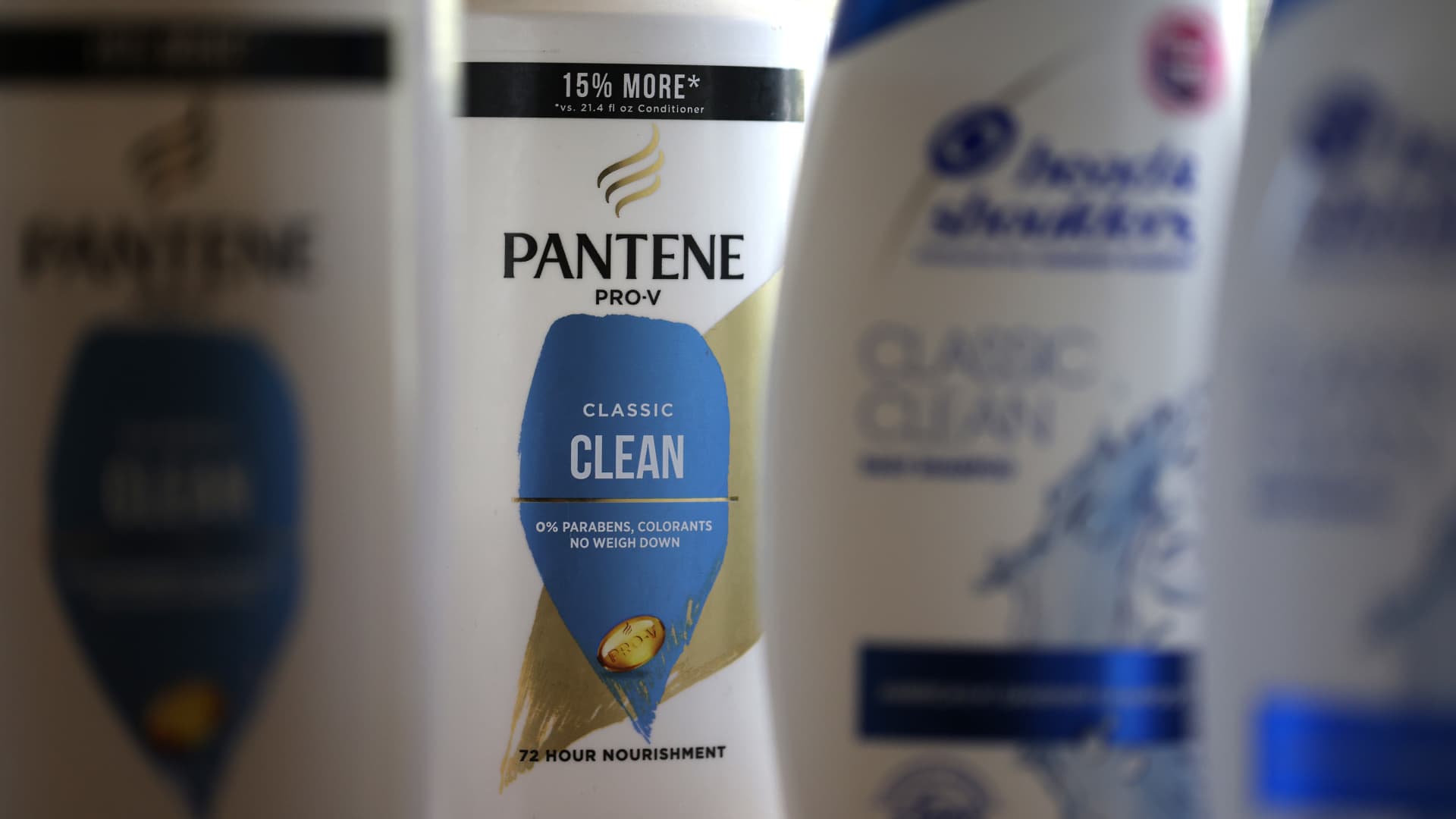

Procter & Gamble shares were down sharply early in Friday’s session after the consumer products giant reported a mixed quarter. We viewed the action as a bit of profit-taking — and not a reflection of the results. The stock entered the session on a four-day winning streak while the broader market declined. Late Friday, as the Dow went into the green, so did P & G stock. P & G sales in the three months ended March 31 increased 1% year over year (3% organic) to $20.195 billion, short versus the $20.408 billion expected by analysts, according to data provider LSEG. Adjusted earnings per share rose 11% to $1.52, topping analyst forecasts of $1.37. Procter & Gamble Why we own it : We like P & G because demand for its household and personal care products does not tend to fluctuate based on the economy. It has effectively navigated high inflation over the past two years. With signs of an uptick lately and expectations of higher Fed interest rates for longer, we’re glad to have this defensive stock in our portfolio. Competitors : Colgate-Palmolive and Unilever Weight in Club portfolio : 2.6% Most recent buy : April 3, 2024 Initiated : April 7, 2022 Bottom line Sales were weaker than expected, but it was more than offset by a 300-basis-point improvement in gross margin, resulting in a beat on earnings. And because of that strong profitability, management was able to raise its full-year earnings forecast to a range above Wall Street’s expectations, even on the low end. Equally important, operating cash flow and free cash flow generation easily outpaced expectations. Cash flow is key to shareholder returns, so we were pleased to see the company report an adjusted free cash flow productivity result (calculated as operating cash flow excluding capital spending divided by net earnings) of 87%. That allowed management to repurchase $1 billion worth of PG shares while paying out another $2.3 billion in dividends. Procter & Gamble last week raised the payout by 7%, the 68 th consecutive increase (this is also the 134 th consecutive year PG has paid a dividend). On the post-earnings call with investors, CFO Andre Schulten said there is “no trade-down of note” to private label brands in the United States, but the company is seeing shoppers trade up into P & G products. Volumes were impacted by some inventory destocking, which isn’t expected to be a prolonged headwind. Schulten expects to see volumes increase beyond the 3% mark hit this quarter. Foreign exchange is proving to be less of a headwind and commodity costs are coming down. Factor in the strong cash flow generation, revised guidance, and improving volumes, and we came away feeling very good about Procter & Gamble’s future, no matter the economic backdrop. As a result, we reiterate our 1 rating and are nudging up our price target to $170 (from $168). Procter & Gamble offers best-in-class value and can therefore grow earnings via a combination of cost discipline and volume growth (not purely on price…
Read More: P&G’s initial decline had nothing to do with earnings. Investors agreed
